

Around the world, pension funds are increasing their allocations to private markets as they seek greater diversification, resilient sources of return and access to investment opportunities that are becoming less available through listed markets. From North America and Europe to Australia and parts of Asia, private equity, private credit, infrastructure and real estate have become strategic components of long-term institutional portfolios.
For South African retirement funds, these global developments offer valuable insight into how long-term investing is evolving. Private assets provide access to a broader investment universe while helping build more resilient portfolios in an environment where public markets are increasingly concentrated around a handful of large technology companies and remain vulnerable to heightened volatility.
Why global investors are looking beyond public markets
One of the biggest drivers of this shift is the changing nature of the investment landscape.
Although there are approximately 19,000 US companies with revenues exceeding US$100 million, only around 13% are publicly listed. More than 16,500 operate in the private sector. At the same time, the number of US-listed companies has fallen from around 7,500 in 2000 to approximately 3,700 today.
Many of today’s fastest-growing businesses, including SpaceX, Open AI and Anthropic, have built significant valuations while remaining private. This means an increasing share of economic growth is taking place outside public markets.
Private assets under management have grown from approximately US$11 trillion in 2020 to around US$20 trillion today and are projected by PitchBook to reach US$25-30 trillion by 2030. This expanding opportunity set is one reason institutional investors globally continue increasing allocations to private markets.
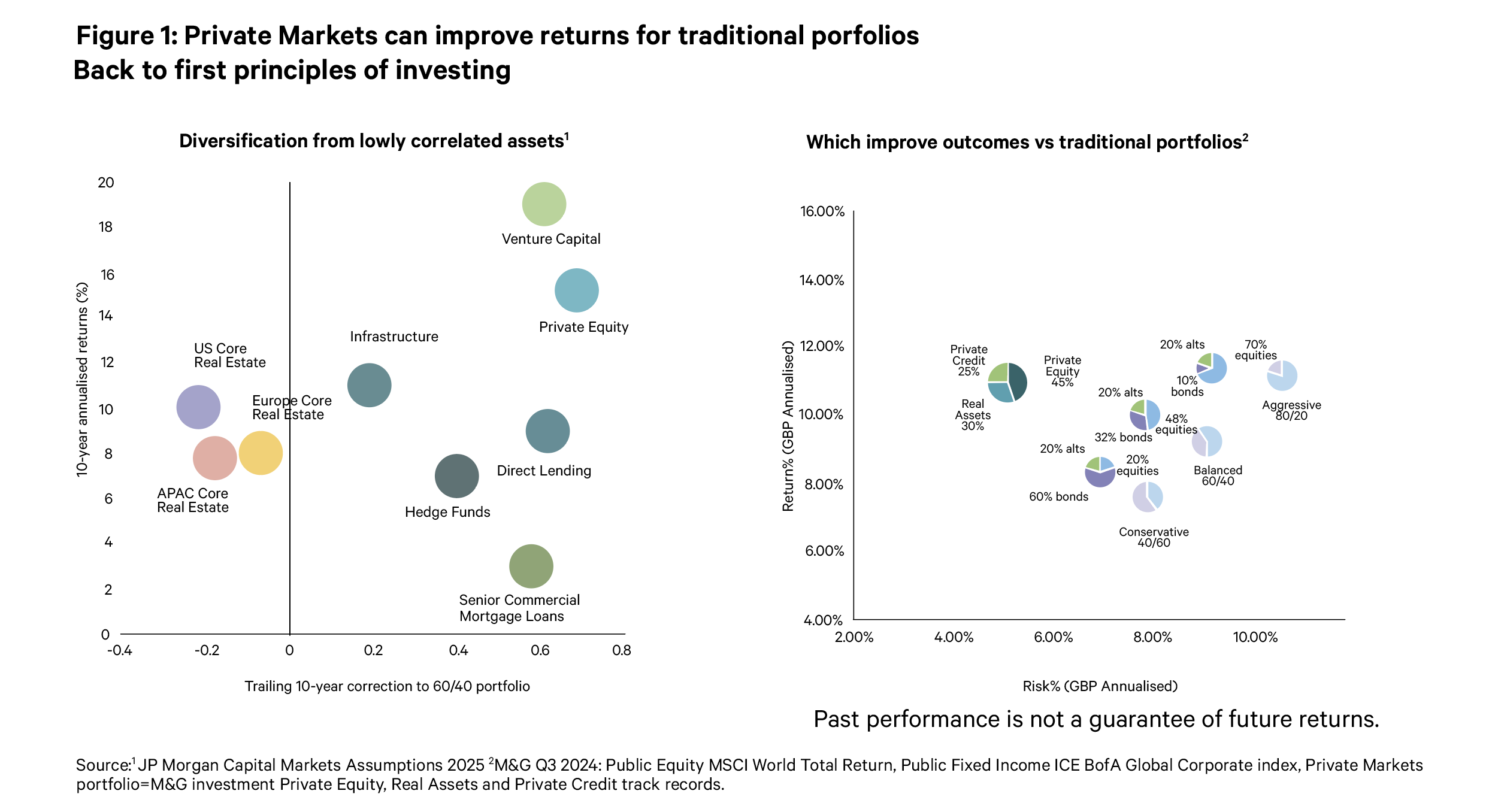
Whether across private credit, equity, infrastructure or real estate, private assets have consistently demonstrated their ability to enhance multi-asset portfolios through lower correlation with traditional listed investments, improving portfolio diversification and long-term return potential.
Private credit: Expanding opportunities for institutional investors
Private credit has become one of the fastest growing areas within private markets, providing pension investors with diversified income opportunities beyond traditional fixed income.
The opportunity set ranges from corporate lending and asset-backed finance to significant risk transfer (SRT), where investors assume a portion of a bank’s credit risk in exchange for an ongoing premium. Investors can also access income streams backed by residential mortgages, vehicle finance, mobile phone contracts and other specialised assets.
These investments span the full credit spectrum, from investment grade to higher-yielding strategies, allowing investors to tailor portfolios to specific income and risk objectives.
Infrastructure: Investing in long-term global trends
Infrastructure remains a cornerstone of private market investing for many of the world’s largest pension funds because its long-term investment horizon aligns naturally with retirement liabilities.
Governments globally continue to face significant funding constraints. McKinsey & Company estimates a US$106 trillion infrastructure funding shortfall by 2040, creating substantial opportunities for institutional investors.
Demand is being driven by powerful structural trends, including digitisation through AI data centres and telecommunications infrastructure, decarbonisation through renewable energy, decentralised energy systems, ageing transport and utilities networks and increasing investment in national resilience and security.
These long-term themes continue to create attractive investment opportunities supported by cash flows, while the ability to invest across the infrastructure risk spectrum provides exposure to growth alongside potential downside protection, low correlation to both public and private market strategies, and inflation protection.
Real estate continues to evolve
Institutional investors are also becoming more selective in real estate. Beyond traditional core property, value-add strategies can generate higher returns through refurbishment, redevelopment and active asset management, providing access to a broader range of risk and return opportunities.
Managing private market risks
As private markets have matured, investors have developed a far better understanding of the associated risks.
While fees are generally higher than for listed investments, they reflect the specialist expertise required to source, structure and actively manage these assets. Experienced managers seek to mitigate liquidity, valuation and counterparty risks through disciplined investment processes and rigorous due diligence.
For pension investors, liquidity should be considered within the context of long-term investment horizons. Equally important is partnering with experienced managers who apply robust valuation methodologies and maintain strong alignment of interests with investors.
The historical experience of institutional investors shows that private assets have delivered attractive long-term returns while maintaining relatively low correlations with traditional equity and bond portfolios, making diversification one of their greatest strengths.